
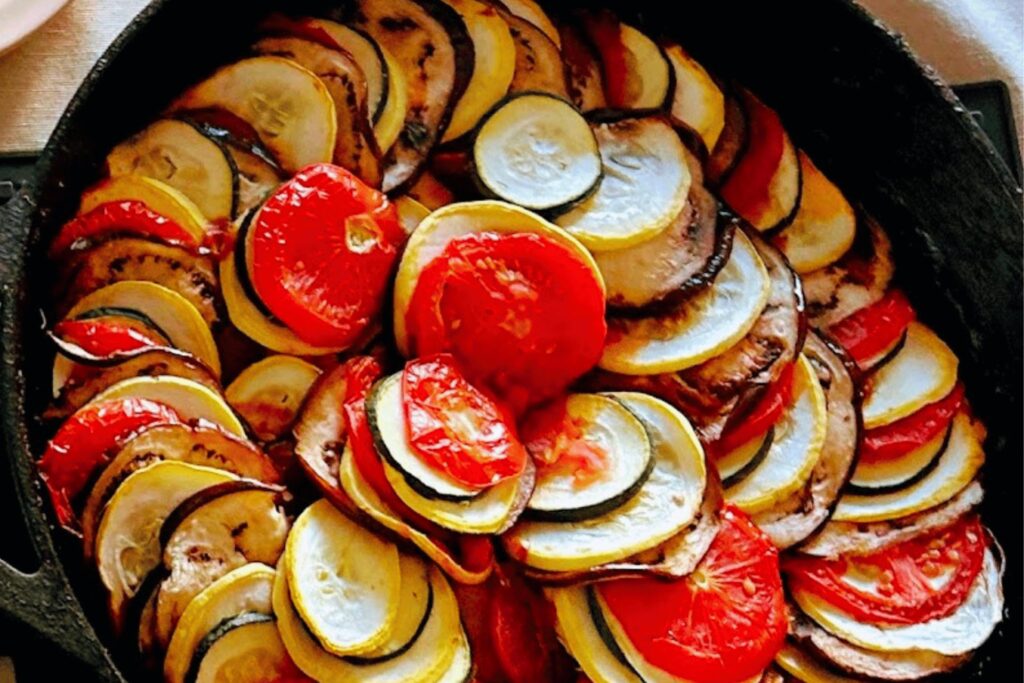

Ratatouille Recipe lovers, this one is for you. If there is one dish that tastes like sunshine, summer markets and the South of France, it has to be ratatouille.
Made with simple vegetables, olive oil and fragrant herbs, this classic dish is deeply connected to the cooking traditions of Provence. It is rustic, comforting and wonderfully easy to adapt to whatever is fresh at the market.
And if you have ever wandered through a farmers market in Aix-en-Provence, you will understand exactly why ratatouille makes so much sense here. Rows of ripe tomatoes, courgettes, aubergines, peppers and fresh herbs are practically an invitation to take them home and start cooking.
This recipe is inspired by a handwritten family recipe, with one important idea at its heart: let each vegetable cook properly before bringing everything together.
So forget complicated techniques. Grab a good pot, some beautiful vegetables and a little patience.
What Makes This Ratatouille Recipe Special?
There are countless ways to prepare ratatouille. Some recipes cook everything together from the beginning, while others cook the vegetables separately before combining them.
The method used in this recipe follows a wonderfully traditional approach: the vegetables are added one by one, allowing each ingredient to develop its own flavor before the tomatoes bring everything together with their natural juices.
The handwritten recipe also calls for a simple bouquet garni, made with bay leaf, thyme and parsley, along with salt and pepper.
That simplicity is very much at the heart of Provençal cuisine.
Ratatouille isn’t meant to be complicated. It is a celebration of good vegetables, olive oil, herbs and time.
Ingredients for This Provençal Ratatouille Recipe
This recipe makes approximately 4 servings.
Vegetables
- 1 large onion
- 2 medium aubergines
- 2–3 courgettes
- 2 bell peppers, preferably red and green
- 5–6 very ripe tomatoes
- 2–3 cloves of garlic
- 4–5 tablespoons olive oil
Herbs and seasoning
- 1 bay leaf
- A few sprigs of fresh thyme
- A small handful of fresh parsley
- Salt
- Black pepper
You can adjust the quantities depending on the size of your vegetables. That’s part of the charm of ratatouille: there is no need to measure everything with absolute precision.
The important thing is to use ripe, flavorful vegetables.
If you are making this in summer, look for produce at a local market rather than relying on vegetables that have travelled thousands of kilometres.
How to Make Ratatouille Step by Step
1. Prepare Your Bouquet Garni
Start by preparing your herbs.
Combine a bay leaf with thyme and parsley to create a simple bouquet garni. You can tie the herbs together with kitchen twine or place them in a small herb bag if you have one.
This will gently infuse the vegetables as they cook without leaving pieces of herbs throughout the finished dish.
Season with salt and pepper as you go, rather than waiting until the very end.
2. Cook the Onions First
Heat a generous splash of olive oil in a large, heavy-bottomed pot or casserole over medium heat.
Slice the onion and add it to the pot.
Cook gently until the onions become soft and translucent. You don’t want them to burn or become too dark. The goal is to release their sweetness and create the flavorful base of the dish.
This is the first layer of your ratatouille.
3. Add the Aubergines
Next come the aubergines.
Cut them into medium-sized cubes and add them to the pot. Give them time to soften and absorb some of the olive oil.
Aubergines are famous for soaking up oil, so don’t panic if they seem particularly hungry at this stage. Just keep the heat moderate and stir regularly.
Once they have softened, move on to the next vegetable.
4. Add the Courgettes
Cut the courgettes into roughly equal-sized pieces and add them to the pot.
Cook them until they begin to soften while still retaining some structure.
At this point, the pot should already smell unmistakably Mediterranean: warm olive oil, onions, aubergines and herbs coming together.
5. Add the Peppers
Now it’s time for the peppers.
Remove the seeds and cut the peppers into strips or small pieces before adding them to the pot.
Red and green peppers work particularly well because they bring sweetness, freshness and a little color to the dish.
Continue cooking gently and stir occasionally so that the vegetables cook evenly.
6. Add the Tomatoes Last
This is one of the most important details from the original handwritten recipe.
The tomatoes go in last.
Use very ripe tomatoes and cut them into small pieces. Add them to the pot once the other vegetables have had time to cook.
Why?
Because those ripe tomatoes contain plenty of natural juice. Once they hit the warm vegetables, they release that beautiful tomato flavor and create the liquid that brings the entire dish together.
Add your garlic, bouquet garni, salt and pepper.
Give everything a good stir.
7. Let Everything Cook Slowly
Now comes the part that requires the least effort and the most patience.
Lower the heat, cover the pot and let the ratatouille cook gently until all the vegetables are completely tender.
Stir from time to time and check the consistency.
You want the vegetables to become soft and beautifully combined, but not completely disappear into a purée.
If the tomatoes are particularly juicy, they should provide enough liquid for the dish. If necessary, you can add a small splash of water, but avoid turning the ratatouille into a soup.
Taste before serving and adjust the salt and pepper if needed.
Remove the bouquet garni and bay leaf before serving.
The Secret to a good Ratatouille Recipe
The biggest secret isn’t a special ingredient.
It’s patience.
Ratatouille is one of those dishes that rewards slow cooking. Don’t rush the vegetables and don’t blast everything over high heat.
Cooking the vegetables progressively allows their individual flavors to develop before they eventually become one dish.
And don’t worry if your ratatouille looks slightly different every time you make it. That’s exactly what you want from a traditional home-cooked dish.
In Provence, cooking has never been about making every plate identical.
It’s about using what is good and available.
What to Serve With Ratatouille
Ratatouille can be served in plenty of ways.
For a simple vegetarian meal, serve it with crusty bread, rice or potatoes. It also works beautifully alongside grilled fish or meat.
And if you’re feeling particularly Provençal, serve it with a glass of chilled rosé wine.
For a complete taste of the region, you could start with some tapenade and fresh fougasse, followed by ratatouille and finish with a Calisson d’Aix.
That’s practically Provence on a plate.
Where to Find the Ingredients in Aix-en-Provence
If you’re staying in Aix-en-Provence, one of the best ways to experience Provençal cooking is to visit the city’s markets.
Rather than simply treating a market as somewhere to buy food, take your time. Look at the produce, smell the herbs, watch the local producers and see what’s in season.
Aix’s food markets are particularly good for discovering the ingredients that define everyday cooking in Provence: tomatoes, peppers, aubergines, courgettes, olives, herbs, cheeses and fresh bread.
You can read more about the city’s markets and food culture in our Aix-en-Provence travel guide.
And if you want to experience the markets with someone who knows them, our Morning Market and Food Tasting Tour takes you through Aix’s markets while introducing you to local producers and Provençal specialties.
Bon Appétit!
This Ratatouille Recipe is simple, generous and made for sharing.
Use the freshest vegetables you can find, take your time with each stage and let the tomatoes bring everything together at the end.
And if making it at home leaves you dreaming of Provence, perhaps that’s a sign.
The next step is to come and taste it for yourself.
À bientôt in Aix-en-Provence!