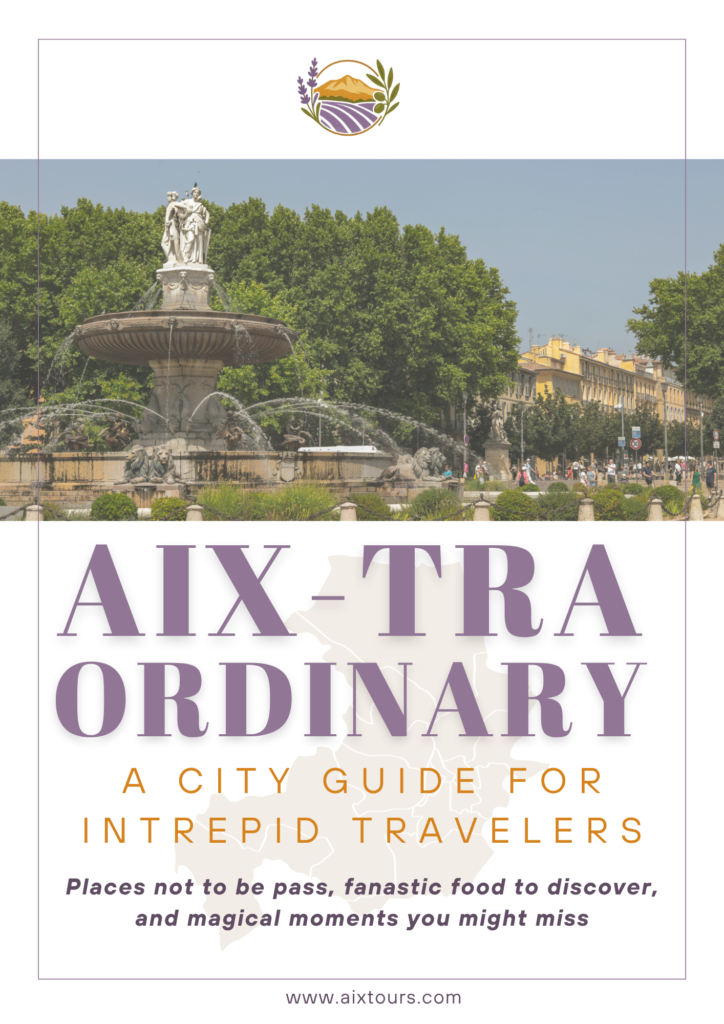
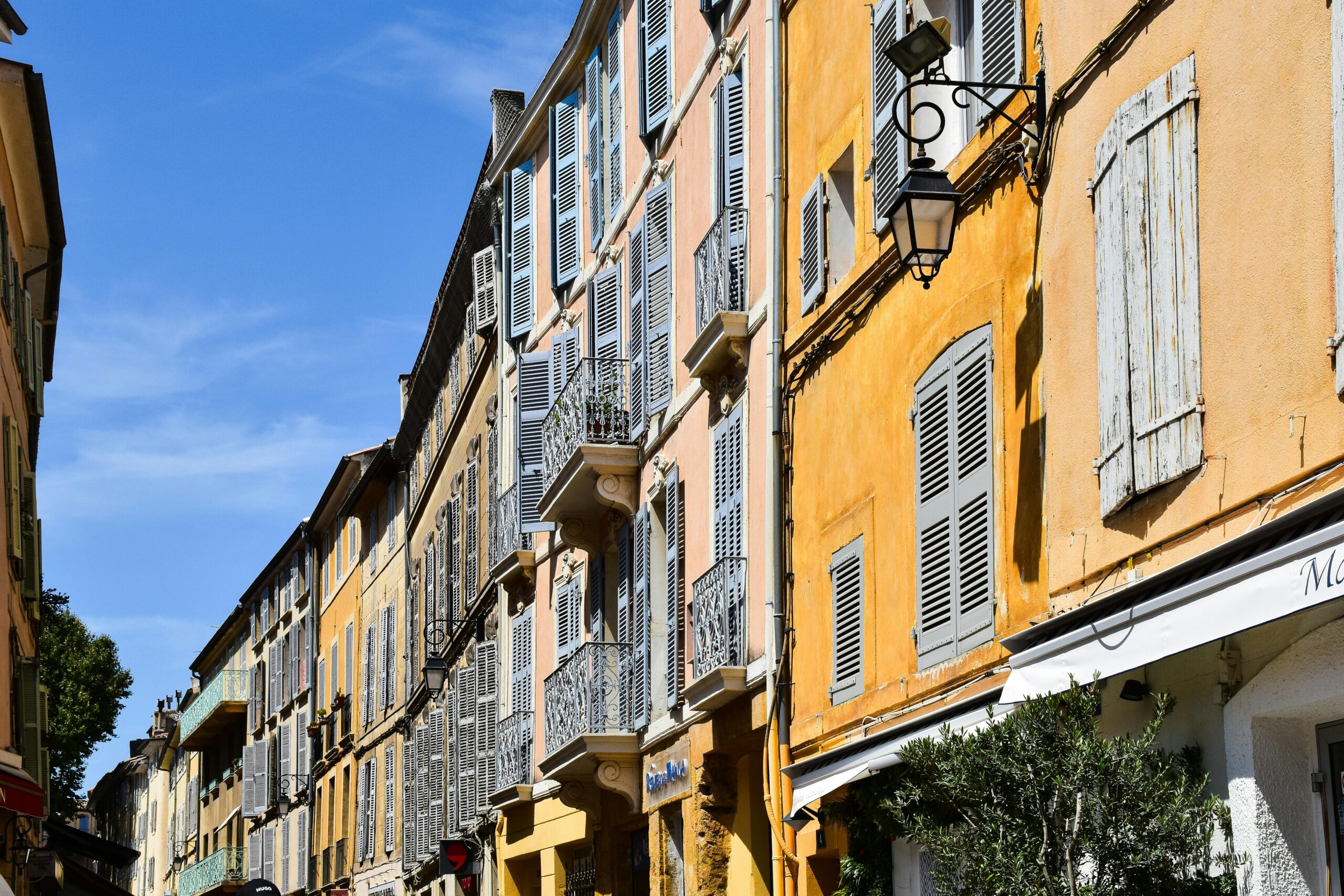

There’s a reason Provence captures people’s imagination like almost nowhere else in France. The region combines lavender fields stretching to the horizon, medieval hilltop villages, Mediterranean beaches, vineyards, Roman history, and endless golden light that inspired artists like Cézanne and Van Gogh. At the center of it all sits Aix-en-Provence, one of the best bases for discovering southern France.
Why Start Your Provence Trip in Aix-en-Provence?
Unlike larger cities, Aix-en-Provence offers a calmer and more authentic atmosphere while still being incredibly well connected.
The city itself is famous for:
- elegant fountains,
- shaded streets,
- colorful markets,
- cafés terraces,
- and its deep artistic heritage linked to Paul Cézanne.
But what truly makes Aix special is its strategic location.
From Aix-en-Provence, you can easily:
- reach the Mediterranean coast,
- explore mountain landscapes,
- visit famous Provençal villages,
- and return in the evening to a walkable, charming city center.
For many travelers, Aix offers the perfect balance between relaxation and exploration.
Day 1: Discover Aix-en-Provence
Before exploring the rest of Provence, spend your first day enjoying Aix itself.
Morning: Wander Through the Historic Center
The best way to experience Aix-en-Provence is simply by walking.
Start your morning on the famous Cours Mirabeau, the city’s iconic boulevard lined with plane trees, fountains, cafés, and elegant architecture.
From there, explore:
- Place d’Albertas,
- Place des Cardeurs,
- the Mazarin Quarter,
- and the narrow hidden streets surrounding the old town.
Aix is often called the “City of a Thousand Fountains,” and part of the charm comes from discovering them unexpectedly while wandering.
Afternoon: Markets & Provençal Food
Aix’s markets are one of the highlights of the city.
Depending on the day, you’ll find:
- fresh produce,
- lavender products,
- soaps,
- cheeses,
- olives,
- spices,
- flowers,
- and handmade crafts.
The atmosphere feels authentically Provençal, especially during sunny mornings when locals gather for coffee and shopping.
Don’t leave Aix without trying:
- calissons,
- tapenade,
- Provençal rosé,
- or fresh pastries from local bakeries.
Evening: Sunset & Local Atmosphere
As temperatures cool down, Aix becomes especially lively.
Locals fill terraces, musicians appear in squares, and the city takes on a golden glow that feels uniquely southern French.
Enjoy a relaxed dinner outdoors and take time to appreciate the slower rhythm of Provence.
Day 2: The Luberon Villages
No Provence road trip is complete without exploring the Luberon.
This region is famous worldwide for its hilltop villages, vineyards, lavender scenery, and timeless atmosphere.
Driving through the Luberon feels like entering a postcard.
Gordes: Provence’s Most Famous Village
Perched dramatically on a hillside, Gordes is one of the most photographed villages in France.
Stone houses cascade down the slope while panoramic views stretch across the valley below.
Visitors love Gordes for:
- its architecture,
- quiet stone streets,
- art galleries,
- cafés,
- and scenic viewpoints.
Early morning or late afternoon offers the best light for photography.
Roussillon: The Red Village
Unlike most Provençal villages, Roussillon stands out because of its extraordinary red and orange colors.
The cliffs and buildings are colored naturally by ochre pigments, creating landscapes unlike anywhere else in Provence.
Walking through Roussillon feels almost cinematic, especially under the intense summer sun.
Lourmarin: Elegant & Lively
Lourmarin combines Provençal beauty with a more vibrant atmosphere.
Known for:
- boutique shops,
- local restaurants,
- vineyards,
- and lively cafés,
the village attracts both locals and visitors looking for a refined Provençal experience.
Many travelers consider Lourmarin one of the most enjoyable villages to spend an entire afternoon.
Day 3: Lavender Fields & Valensole Plateau
If you’re visiting Provence during summer, the lavender fields are an absolute must.
The most famous area is the Valensole Plateau, located north of Aix-en-Provence.
Between late June and mid-July, endless purple fields transform the landscape into one of the most iconic scenes in France.
Best Time to Visit Lavender Fields
Timing matters enormously.
The peak bloom usually happens:
- late June,
- early July,
- and sometimes mid-July depending on weather conditions.
For the best experience:
- arrive early morning,
- or visit near sunset,
- when the light becomes softer and crowds decrease.
Midday can become extremely hot during summer.
Photography Tips
Lavender fields are beautiful almost everywhere, but certain moments create unforgettable photos:
- sunrise light,
- golden hour,
- old stone farmhouses,
- and winding roads cutting through purple landscapes.
Drone photography is especially popular in the region.
Beyond Lavender
The Valensole area also offers:
- sunflower fields,
- local honey farms,
- small villages,
- and scenic countryside roads perfect for slow travel.
Many visitors rush through Provence too quickly, but this region is best enjoyed slowly.
Day 4: Marseille & the Mediterranean
After several days of villages and countryside, Provence’s coastline offers a completely different atmosphere.
Marseille is France’s oldest city and one of its most culturally diverse destinations.
It feels energetic, chaotic, authentic, and deeply Mediterranean.
The Old Port (Vieux-Port)
The Vieux-Port remains the heart of Marseille.
Fishing boats, ferries, seafood restaurants, and cafés create an atmosphere that feels constantly alive.
This is one of the best places to:
- eat fresh seafood,
- enjoy sunset views,
- and experience Marseille’s local energy.
Le Panier District
Le Panier is Marseille’s oldest neighborhood.
Filled with:
- colorful streets,
- murals,
- artisan shops,
- staircases,
- and hidden cafés,
it has become one of the city’s most photogenic areas.
The neighborhood perfectly blends history and creativity.
Notre-Dame de la Garde
Overlooking the city from above, Notre-Dame de la Garde offers breathtaking panoramic views of Marseille and the Mediterranean Sea.
It’s one of the most iconic landmarks in southern France.
Day 5: Cassis & the Calanques
Located just outside Marseille, Cassis feels like another world.
This charming fishing town is famous for:
- turquoise water,
- dramatic cliffs,
- hidden coves,
- and relaxed Mediterranean charm.
Explore the Calanques
The Calanques National Park is one of France’s most spectacular coastal landscapes.
Visitors can:
- hike scenic trails,
- take boat tours,
- kayak,
- swim,
- or simply admire the cliffs from viewpoints.
The contrast between white limestone cliffs and blue Mediterranean water is unforgettable.
Enjoy the Harbor
Cassis itself is wonderfully relaxing.
Colorful buildings surround the harbor while restaurants serve fresh seafood and local wine.
Compared to larger coastal cities, Cassis feels intimate and peaceful.
Day 6: Avignon & Roman Provence
Avignon introduces another side of Provence: medieval history and religious heritage.
The city became famous during the 14th century when popes temporarily established their residence there.
Today, Avignon remains one of southern France’s most historically important cities.
Palais des Papes
The Palais des Papes is one of the largest Gothic palaces in Europe.
Its enormous stone walls dominate the city skyline and reflect the immense power once held here.
Inside, visitors discover:
- grand halls,
- chapels,
- courtyards,
- and centuries of fascinating history.
Pont d’Avignon
The famous bridge partially crossing the Rhône River has become one of France’s best-known landmarks.
Even visitors unfamiliar with its history often recognize it instantly.
The Festival Atmosphere
During summer, Avignon transforms thanks to the internationally famous theatre festival.
The city fills with:
- street performers,
- actors,
- musicians,
- and outdoor performances.
The atmosphere becomes incredibly vibrant.
Day 7: Arles & Van Gogh’s Provence
Arles combines Roman history, art, and Provençal atmosphere beautifully.
This city became internationally famous because of Vincent van Gogh, who created some of his most celebrated paintings here.
Roman Heritage
Arles contains some of the best-preserved Roman monuments in France.
Visitors can explore:
- arenas,
- theaters,
- baths,
- and ancient ruins spread throughout the city.
The Roman amphitheater remains particularly impressive.
Following Van Gogh’s Footsteps
Many travelers visit Arles specifically because of Van Gogh.
Several locations in the city directly inspired his paintings, including cafés and public squares that still resemble his works today.
For art lovers, Arles offers a unique emotional connection between place and creativity.
Best Time for a Provence Road Trip
Every season offers something different.
Spring (April–June)
Perfect temperatures, flowers blooming, fewer crowds.
Summer (June–August)
Lavender season, beach weather, festivals, but also peak tourism.
Autumn (September–October)
Warm weather, vineyards, quieter villages, golden landscapes.
Winter (November–March)
Peaceful atmosphere, Christmas markets, lower prices, but fewer lavender fields and outdoor events.
Tips for Driving in Provence
Driving is one of the best ways to explore Provence freely.
However, there are a few important things to know:
- village roads can be narrow,
- parking in summer can become difficult,
- and many scenic areas require patience during peak season.
For the best experience:
- start days early,
- avoid rushing,
- and leave time for spontaneous stops.
Some of the best moments in Provence happen unexpectedly.
Why Provence Captures People Forever
Many travelers arrive in Provence expecting beautiful scenery.
What surprises them is the atmosphere.
It’s the slow lunches, market conversations, evening light, village sounds, and feeling of timelessness that make the region unforgettable.
Provence isn’t simply a destination you visit quickly.
It’s a place people emotionally connect with.
Explore Provence With Local Insight